







One-to-One Specialist Appointment
Feel confident in the care you receive. Our specialists can interpret your scan and provide comprehensive advice if necessary.
£525
How the Injection Helps
Feel confident in the care you receive. Our specialists can interpret your scan and provide comprehensive advice if necessary.

You do not require a referral before booking an appointment with our clinic, giving you back complete control of your health.

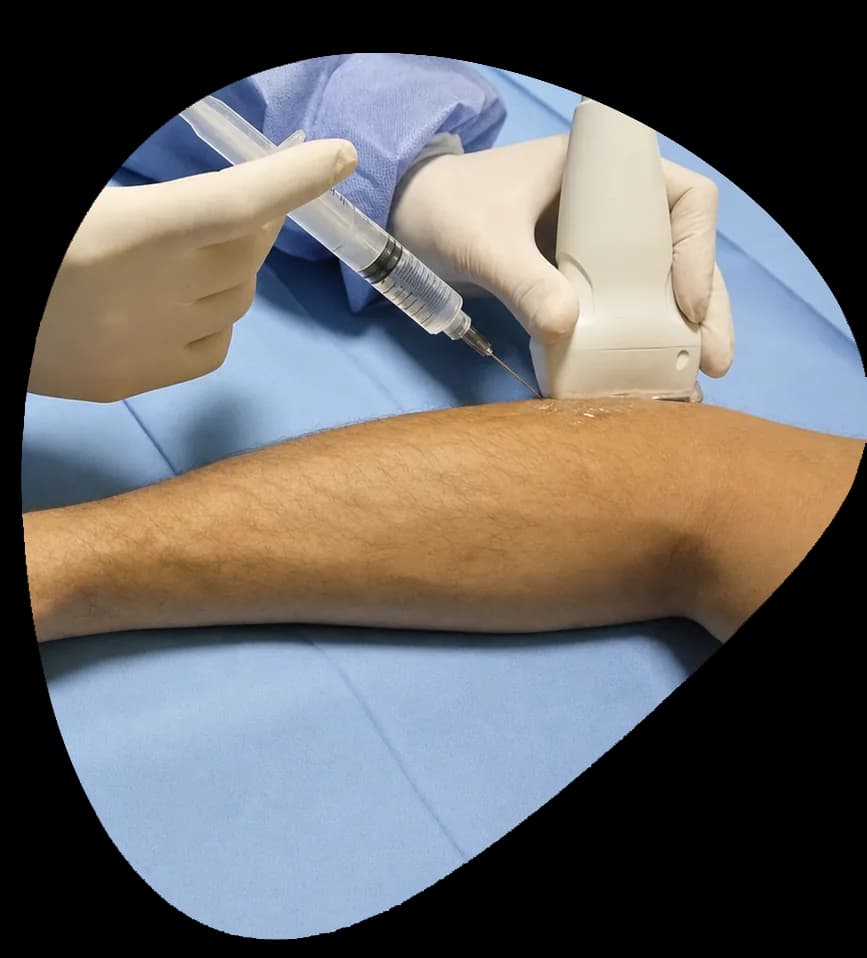
A specialist musculoskeletal doctor, an expert in precision targeting of the affected area using ultrasound guidance, will perform your procedure with a report on the same day.

Following your appointment, a complete digital report of your Ultrasound examination will be emailed to you directly and securely.

In addition to the report, images of your scan will be sent for you to share with a healthcare specialist of your choice.
Tennis elbow, clinically known as lateral epicondylitis (or common extensor tendinopathy), is a condition affecting the tendons that attach to the bony bump on the outer side of the elbow, the common extensor origin. Repeated strain causes small areas of tendon damage, leading to pain and tenderness on the outer elbow.
Despite the name, most people who develop it have never played tennis. It is typically caused by repetitive gripping, lifting or wrist movements from manual work, computer use, DIY or sport, and most commonly affects people aged 35 to 55.
While tennis elbow can settle on its own, this can take many months to well over a year, which is why many people seek treatment to relieve pain and get back to normal use far sooner.
The hallmark symptom is pain and tenderness on the outer side of the elbow, which may radiate down the forearm. Typical signs include:
It most commonly affects people aged 35 to 55 and anyone whose work or hobbies involve repetitive forearm and wrist use. An ultrasound assessment confirms the diagnosis, shows the state of the tendon, and rules out other causes of outer-elbow pain.
At the Harley Street Ultrasound Group, your appointment begins with a diagnostic ultrasound assessment, performed by your specialist consultant doctor. Ultrasound shows the common extensor tendon in real time and is used to confirm tennis elbow and, just as importantly, to rule out other causes of outer-elbow pain such as a radial nerve problem, joint arthritis or a tendon tear, which can feel similar but need different treatment.
Diagnosing the problem accurately first is what makes the treatment precise. Because the same ultrasound is then used to guide the injection, your consultant can place the needle exactly into the target structure, rather than by external approximations.
If the assessment shows that a different treatment would serve you better, your consultant will tell you on the day. See “What if I don’t need an injection?” below.
A tennis elbow injection is an ultrasound-guided injection placed precisely at the common extensor origin, the painful tendon attachment on the outer elbow. Depending on your assessment, your consultant may use a steroid (cortisone) injection to settle pain and inflammation, or platelet-rich plasma (PRP) to support tendon healing.
Because the procedure is performed under real-time ultrasound, your consultant can ensure the injection reaches the exact location and confirm the medication is going precisely to where it is needed. This precision is what makes the treatment both effective and safe, allowing the nearby radial nerve and blood vessels to be identified and avoided.
For longstanding or chronic tennis elbow, PRP is often preferred, because it targets tendon repair rather than only masking pain. Your consultant will recommend the option best suited to the stage and severity of your condition.
Most patients find the injection far more comfortable than expected. Local anaesthetic is used, so you typically feel a small sting as it goes in, followed by a brief sensation of pressure at the elbow. This is normal and settles quickly.
The appointment usually takes around 20–30 minutes from assessment to completion:
There is no general anaesthetic and no overnight stay. You can usually drive yourself home, though arranging a lift is sensible if your arm feels sore afterwards.
Your injection is performed by a consultant specialist doctor, not a physiotherapist, nurse or GP. This matters, as the majority of MSK injections in the UK are delivered by non-consultant practitioners, often without ultrasound image guidance.
At the Harley Street Ultrasound Group, you receive both the clinical judgement of a senior specialist and the precision of real-time ultrasound examination in a single appointment. Your consultant assesses the elbow, confirms the source of pain, performs the procedure and explains your aftercare personally.
We will never give you an injection you do not need. If, after your ultrasound assessment, your consultant decides an injection is not the right treatment for you, the procedure simply won’t go ahead. You will be charged at our standard diagnostic ultrasound rate, not the full treatment price.
This is a deliberate commitment to clinical integrity. Some providers treat every appointment as a guaranteed procedure; we don’t. You can book knowing that you will receive a genuine specialist assessment first, and that treatment only proceeds when a senior clinician believes it is genuinely warranted.
If an injection isn’t appropriate, your consultant will explain why and set out the alternatives. This may include physiotherapy, a different injection, such as PRP, or onward referral, meaning you still leave with a clear plan.
With a steroid injection, many patients notice improved comfort within a few days to two weeks as the inflammation settles. PRP works more gradually, supporting tendon healing over several weeks, with benefit often continuing to build over two to three months.
Tennis elbow injections have a good success rate for reducing pain and restoring grip and function, and for many people a single treatment is enough. Results vary with how longstanding the problem is and how the tendon responds; some patients benefit from a repeat procedure or a course of physiotherapy. Your consultant will give you a realistic picture based on your own assessment.
There is no significant downtime. You can return to everyday activities the same day, though it is sensible to observe a short period of relative rest, avoiding heavy gripping or repetitive wrist use, for the first few days. Some mild soreness at the elbow for a day or two is normal.
The most important part of aftercare is a programme of eccentric strengthening exercises for the forearm tendons, which build the tendon’s resilience and reduce the chance of recurrence. A tennis elbow brace or strap can also help offload the tendon during activity. Your consultant will recommend specific exercises, and many patients benefit from a short course of physiotherapy alongside the treatment.
You will receive clear written aftercare guidance, and our team remains available if you have any questions as you recover.
Both are effective, but they work differently. A steroid (cortisone) injection calms inflammation and can give quicker short-term pain relief, which suits more recent or acutely painful tennis elbow. Platelet-rich plasma (PRP) uses a concentrate of your own blood to stimulate the tendon to repair, with benefit building more gradually.
For longstanding or chronic tennis elbow, PRP is often preferred, because it addresses the underlying tendon problem rather than only masking the pain, and the effect tends to last longer where the tendon has degenerated over time.
Your consultant will recommend the right option after the ultrasound assessment, based on how longstanding your symptoms are and the condition of the tendon. The aim is the treatment most likely to work for your specific case, not a one-size-fits-all approach.
An ultrasound-guided tennis elbow injection at The Harley Street Ultrasound Group is £525, all fees inclusive. There are no extra charges for the consultant assessment, the diagnostic ultrasound, the procedure itself, or your written report.
What’s included in the price:
There is no referral required and no waiting lists. Importantly, if your consultant assesses you and decides an injection is not clinically appropriate, you will only be charged at our standard diagnostic ultrasound rate, not the procedure price. We accept self-pay and most major UK private health insurers; please confirm cover with your insurer before booking.
Coming to us privately does not affect your NHS care. Our goal is to get you answers and treatment quickly, without the long waits often involved in accessing injection therapy on the NHS.
You are seen by a consultant specialist who can assess, diagnose and, where appropriate, treat your tennis elbow in a single visit. Your report and images can be shared securely with your NHS GP or any specialist, and if your situation needs onward NHS care your consultant will write to your GP accordingly.
We don’t want you waiting months in pain when effective treatment is available now.
Our team are fully registered and regulated for practice in the United Kingdom. Our patients should expect nothing less.







We can provide scan images directly to your smartphone, often on the same day following your appointment. Gain the peace of mind and insight you need, without delay.
Same-Day Results
Timely & Efficient
Share with your Doctor
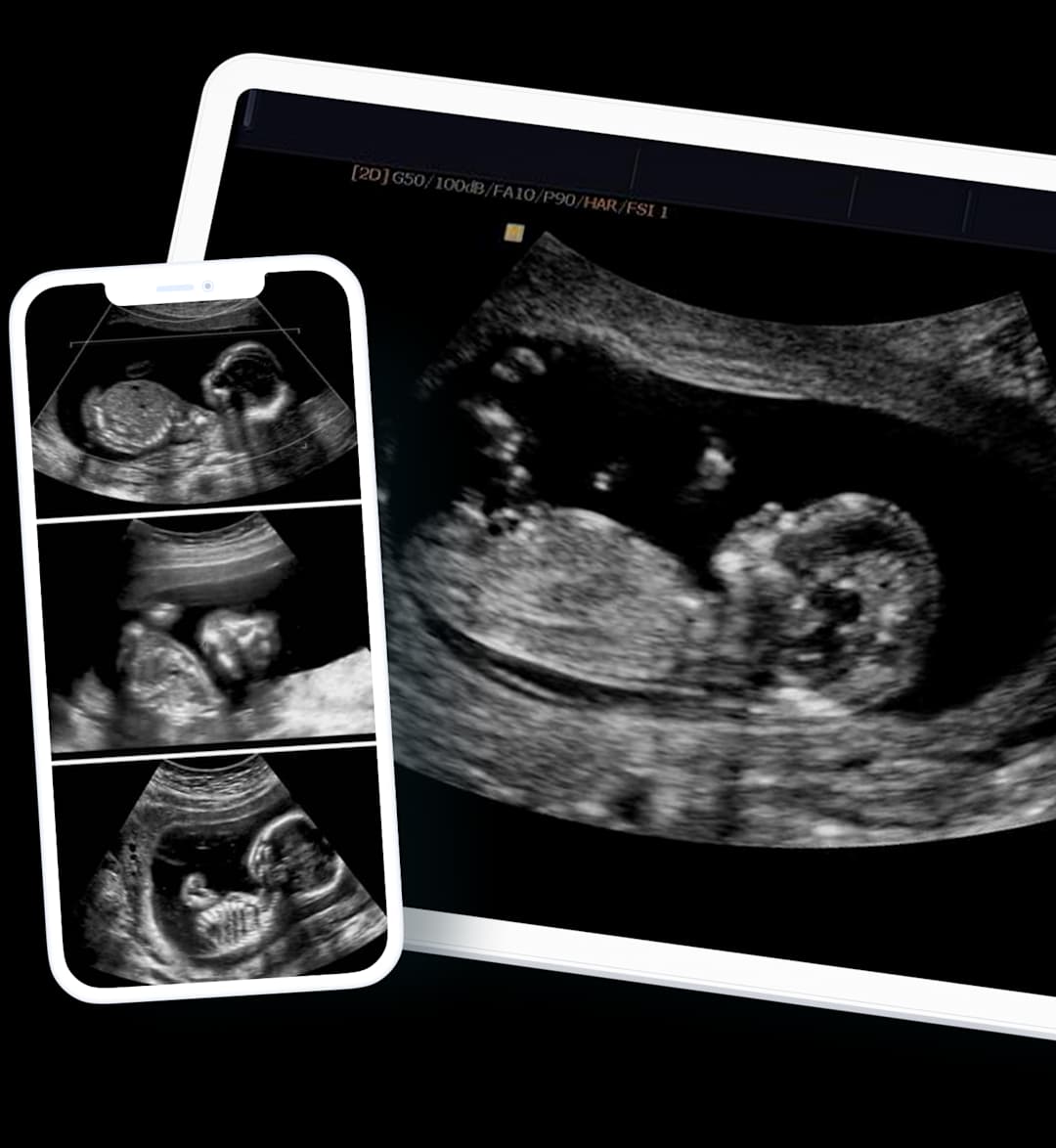
We provide insight on a range of topics, including the latest news affecting our practice.
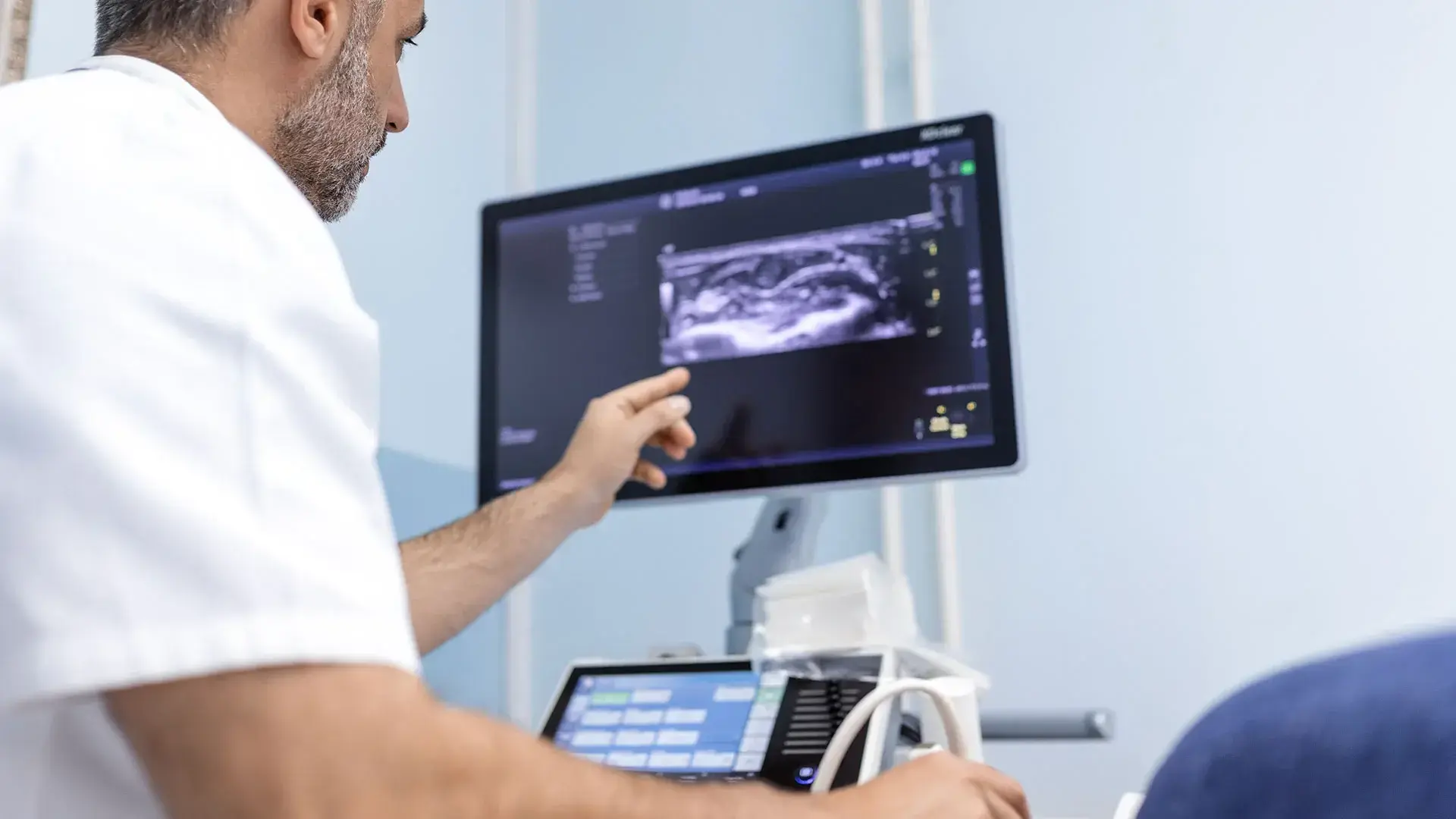
Dr Tahir Hussein · May 2, 2023
Testicular ultrasounds are a safe and non-invasive way for doctors to assess and diagnose abnormalities in the testicles. If you’re anxious about the procedure, don’t worry—it’s natural to feel that way.
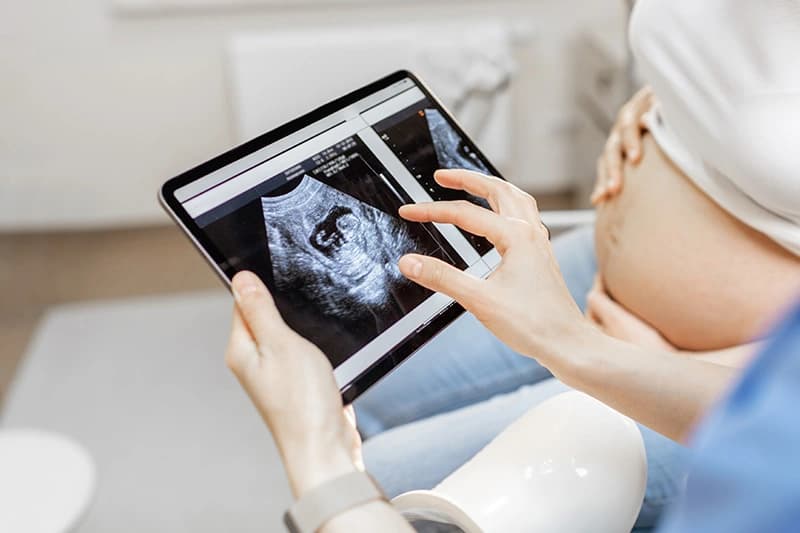
Heba Alkutbi · February 8, 2024
Pregnancy is a journey filled with moments of joy and anticipation, and the anomaly scan—or anatomy scan—is a significant and exciting milestone. This article will guide you through what an anomaly scan is, what to expect during the procedure, the findings you might encounter, and how to interpret the results.

Heba Alkutbi · April 23, 2023
A commonly used test is the Non-Invasive Prenatal Test (NIPT), also known as the Prenatal Test. The test is designed to screen the foetus for genetic conditions and chromosomal abnormalities.

The team at Harley Street Ultrasound Group is made up of Specialist Consultants and Specialist Sonographers you can rely upon. They are among the best in the industry.
This is backed up with a full range of qualifications and accreditations. All of our specialists are fully registered with all applicable medical regulatory bodies.





We are committed to providing a high standard of care to our patients. Take a look at some of the incredible responses we have received.